Shauna Seeteenak: Journey to the Mic

Biography

Shauna Seeteenak is a singer/songwriter originally from Baker Lake, Nunavut. Seeteenak found out she can express her emotions and share her experience with song at the age of ten, and by the age of thirteen she started writing her own hip-hop lyrics. Now, Shauna Seeteenak is titled as an Inuk hip-hop artist and rapper living in Iqaluit, Nunavut, with a popular album called “Therapy Sessions”. Shauna Seeteenak collaborated with Inuit and international artists which paved herself into the music industry and her music tells the truth, challenges Inuit face, sobriety, mental health, and overcoming barriers (Folk on the Rocks,2025).

Creative Life Story

Shauna Seeteenak fell in love with music and rap through two different groups/rappers. The first group was an 80s and 90s female rap group called Salt -N- Pepa, and later she was further inspired by Eminem. When Shauna Seeteenak was a teenager, she had an Xbox with the game called “Rock Band”. The game Rock Band had a free digital audio workshop, so Seeteenak downloaded the workshop and started recording her own songs; moreover, when her music spread around Baker Lake in 2009-2019, Seeteenak sang on stage for the very first time at Festival by The Lake, and the festival is held once a year in Baker Lake. After her performance, she was invited to Iqaluit, Nunavut to sing at the music festival called “Alianait”, and that is where she met well-known artists including Mosha Folger. Folger invited Seeteenak to collaborate in a song for his next album called “String Games” and the song was called “Scaling” (Inuit Art Foundation, 2022).

Shauna Seeteenak met Thor Simonsen at the Ailanait festival, and he became her record label, Hitmakerz; however, in 2019 they both worked together on putting Seeteenak’s first demo together, and then Ever Sick Productions helped Shauna Seeteenak produce her debut album Therapy Sessions in August of 2023. Some of her songs are Sunshine, Makinnialiqtugut (We Will Rise), Thrive, and Qiviktailigit (Don’t Give Up); moreover, the hiphop music explains emotional issues Inuit face. Seeteenak was awarded the Arctic Music Awards in 2023 for her Single song called Qiviktailigit and won the Album of the Year. Shauna Seeteenak’s music is on Apple Music, Soundcloud, Youtube, and Spotify (Inuit Art Foundation, 2022).

When Shauna Seeteenak released her album in 2023, she mentioned that she was very excited, and the album expresses herself. One her heavier songs is called “Too Many Coffins” which focuses on suicide in Nunavut, and she did a shout out to her late friend Larry Tamusaia who took his own life. Seeteenak’s other friend Mumilaaq Qaaqaq who is the former MP for Nunavut also has a part in the song where she does a speech that talks about moldy house conditions, overcrowded homes, and how parents find their kids hanging in their own homes (News, 2021).

Here is a link to the song on Youtube:

 Folk on The Rocks. (2025). Folkontherocks.com. Shauna Seeteenak https://folkontherocks.com/artists/shaunaseeteenak

Inuit Art Foundation. (2022). Shauna Seeteenak | IAQ Profiles https://www.inuitartfoundation.org/lite/profiles/artist/Shauna-Seeteenak

News, N. (2021, August 30). Inuit musician Shauna Seeteenak releases debut album. Nunatsiaq News. https://nunatsiaq.com/stories/article/inuit-musician-shauna-seeteenak-releases-debut-album/

‌Shauna Seeteenak – Topic. (2021). Too Many Coffins (feat. Peand-eL & Mumilaaq Qaqqaq). YouTube. https://www.youtube.com/watch?v=S_0iEjBpy3s
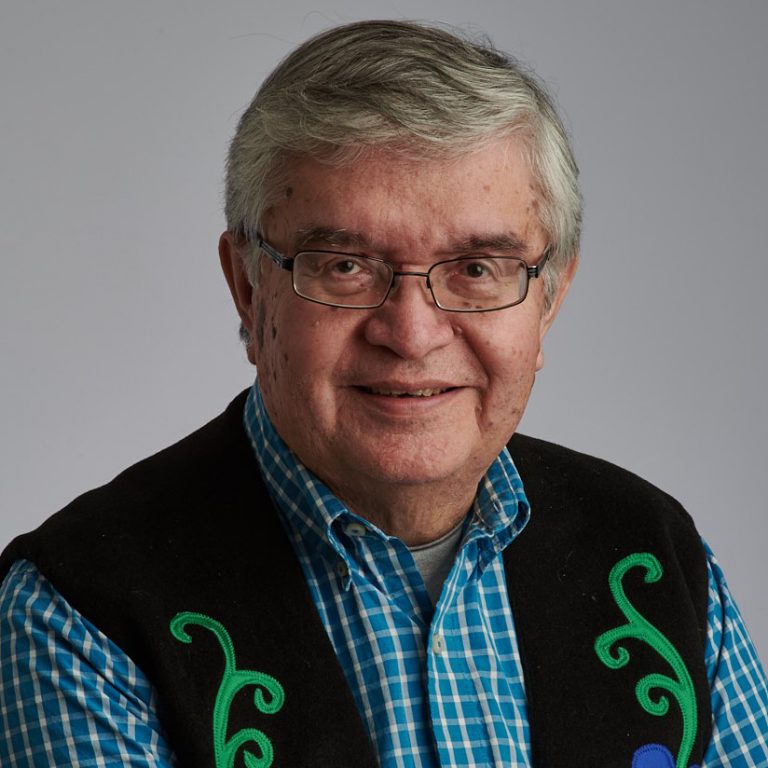
Simon Brascoupé

Simon Brascoupé | Learn | Canadian Museum of History

Biography

Simon Brascoupé, born in 1948, is an artist, educator, and researcher from the Kitigan Zibi Anishinabeg First Nation in Quebec. He also has Haudenosaunee roots, belonging to the Bear Clan. He now lives on Algonquin territory in Ottawa, Ontario. He attended State University of New York at Buffalo, where he earned a B.A. and an M.A., and also work on a Ph.D.

Brascoupé is an Adjunct Professor in the Department of Sociology and Anthropology at Carleton University. He also holds the position of Adjunct Professor in the Department of Indigenous Studies at Trent University. (1) He is also the Senior Vice-President of Education, Communications, and Services at the First Nations Education Administrators Association. Additionally, he is a Certified First Nations Health Manager from the First Nations Health Manager Association and a Certified Aboriginal Professional Administrator from AFOA Canada. (2)

Simon Brascoupé is also a renowned artist whose work is inspired by his Anishinaabe roots. His paintings, sculptures, and mixed media pieces often depict the historical and present-day lives of the Anishinaabe people. His artwork aims to share traditional Anishinaabe beliefs and values about the sacredness of the land and the importance of connecting to nature. His art has been displayed around the world. He has had exhibits in China, Japan, Cuba, the United States, and Canada. Some of his works are included in collections at the Canadian Museum of History in Ottawa, and in the Smithsonian Institution in Washington D.C. Simon has also had some of his pieces exhibited at the National Gallery of Canada. Through his work, as both an artist and an educator, Simon Brascoupé has contributed greatly to the preservation, understanding, and appreciation of Anishinaabe culture. (3)

Creative/Life Story

Simon Brascoupé is a talented artist who incorporates Indigenous traditions into his modern works of art. Throughout his artistic process, he consults and collaborates with Elders and other community members to ensure that his works are authentic and relevant reflections of Indigenous culture. In his art, Simon Brascoupé shows his deep regard for Algonquin Territory and the wisdom found in the animal world and nature. He believes that by watching animals, we can gain valuable knowledge about how to co-exist in harmony with the natural world.

A number of public art installations created by Simon Brascoupé are on exhibit in the National Capital Region. His Algonquin Birch Bark Basket Sculpture is on display at Abinan Place in Gatineau. He met with Algonquin Elders and asked them to share their ideas about what was important to them as he planned this piece of art. (4) His creation entitled Mamawi is located in Pimisi Station in Ottawa. Brascoupé collaborated with over 100 Algonquin artists to create this installation. It features more than 100 painted paddles on a steel canoe structure. At the same location, Algonquin Moose, his sculpture inspired by a hunting story his father told him, is made of red steel and stands almost 5 meters tall. (5) Simon collaborated with his daughter, Mairi, to design artwork for The Ottawa Hospital for its land acknowledgement project; an initiative working towards reconciliation and creating spaces that are welcoming for Indigenous peoples. This installation depicts silhouettes of three medicinal plants, and was inspired by ancient Algonquin birchbark cut-outs. (6)

Simon’s art is not limited to public installations in the National Capital Region. His work is also featured in major corporate and private collections and has been exhibited internationally. Using a traditional Algonquin stencil technique, as well as his knowledge of Indigenous symbols, Simon Brascoupé has created many original prints on canvas and paper. (7)

In addition to creating art, Brascoupé is also dedicated to teaching others about Indigenous knowledge. He is an adjunct professor at both Carleton and Trent universities, where he shares his research on traditional medicine and other Indigenous traditions to promote understanding of Indigenous cultures. Brascoupé has also with worked at many other institutions, holding positions such as Acting Chief Executive Officer of the National Aboriginal Health Organization, Director of Aboriginal Affairs Branch at Environment Canada, and Director of Primary Health Care Division at Health Canada. He currently holds the position of Senior Vice-President of Education, Communications, and Services at the First Nations Education Administrators Association. (8)

Simon Brascoupé not only creates phenomenal Indigenous works of art, he also strives to use his art as a platform for community involvement and the sharing of traditional Indigenous wisdom across many different institutions. His contributions have a lasting impact by enriching public spaces and promoting a richer understanding of Indigenous viewpoints.

The Brand Decolonial Clothing

Blog Post By: Ciara Peltier

Decolonial Clothing Co. is not just a brand, it’s a movement created by two powerful Indigenous voices: Dakota Bear and Casey Desjarlais. Both co-founders are rooted in their identities, with family origins from Treaty 4 and Treaty 6 Territories in present day Saskatchewan. Their lives and work are now based on ancestral and unseeded homelands of the hən̓q̓əmin̓əm̓ and Sḵwx̱wúmesh speaking peoples, in what is commonly known today as the Vancouver area. While not much is publicly available about their early years in terms of schooling and specific job histories, what speaks louder than a resume is their deeply personal mission.

Through every design and statement, they honour the knowledge passed down through generations, the blood of their ancestors that “runs in their veins”, as they reclaim their cultural languages, traditions, and ways of being. Their biography, in sense, is their work: they are warriors, healers, and artists (Decolonial Clothing Co.). Their entrepreneurial journey is also deeply tied to their lived experiences, battling intergenerational trauma, confronting systemic injustices, and pushing back against colonial norms. This foundation of truth and lived resilience is what gives their work authenticity and strength. It’s also why their voices resonate with people both inside and outside of Indigenous communities.

Tendesi Air Freshener’s

Tendesi Airfresheners is proudly run by three sisters: twins, Drew and Jennifer Tenasco and their younger sister, Sienna. All three women are proudly from the community of Kitigan Zibi First Nation. Tendesi Air Fresheners was officially launched in April 2024. However, the idea had been in the works since the spring of 2021. Their official launch started with five original designs, each paired with its own unique scent. Every design was created by Drew Tenasco, the artist behind the brand responsible for all design work. Jennifer handles the business side, networking, outreach, and acts as the spokesperson for Tendesi Airfresheners. Sienna works behind the scenes, managing their website, setting up online sales, and keeping operations running smoothly.

Drew and Jennifer Tenasco proudly representing Tendesi Airfresheners at a community event.

Their idea started when Drew was studying Fine Arts at Fanshawe College in London, Ontario, and had just graduated. When she moved in with her twin sister Jennifer she shared the vision of starting a business together. As broke college students with big dreams, the two began sketching ideas, researching business models, and slowly saving up to bring their vision to life. When they finally had enough to launch, they did. They went door to door in Kitigan Zibi, pitching their air fresheners to local businesses and community members. By the end of that first day, they had already made their money back and secured spots in five stores, from Kitigan Zibi to Ottawa.

One of 5 Tendesi Air Fresheners designs

To visit their online store please visit this link

Erwin Molley Provides Opportunities in Listuguj Community

Biography

In 2021, Erwin Molley, a member of the Listugui community of Quebec, created “Kicks for Kids,” a non-profit organization for kids who do not own decent sports shoes.  As Erwin says, “It started with basketball. I noticed some kids just did not have the proper shoes” (Jacques, 2023, para. 1).  After realizing that the kids in his community of Listugui were lacking decent sports shoes, Erwin felt compelled to start this organization to help the youth. He has been providing sports training year-round for the past three and a half years. During the summer, Erwin created a basketball camp to help develop young players’ skills and endurance.  When kids attended either the camps or the year-round training for a consecutive number of days, they would be offered a pair of new sports shoes – for a sport of their choice – as a recognition of their commitment and determination.  Along with providing support to individual kids, Erwin’s energy encouraged the wider community as well, and over the past three and half years, increasing numbers of children and youth have taken part in this sports program. In addition to running “Kicks for Kids.” Erwin Molley has many other roles in the community of Listuguj.  He is a councillor of the Listuguj Mi’gamq Government, and he is the male mentor for the Listuguj Community Social Services Directorate; as a male mentor, Erwin provides teachings for males in the community of Listuguj who do not go hunting, fishing, and camping.

Creating Opportunities

Watching youth play sports is fantastic because it brings enjoyment to see them succeed. I believe this has been Erwin’s intention, since he built his non-profit organization to help all youth and families who do not have proper shoes. He helps families who are financially stressed because Erwin believes that all kids want to play sports, and it can be challenging for these families to access shoes.  As Jaques (2023) says, “Some families have multiple children who are enrolled in sports, and shoes can run $50-$90.  While it is a free service for all children, Molley does encourage youth to show they are committed to a sport and are dedicated when it comes to attending practices and games before opting for free footwear” (para. 3). With this helping the financial burden is going to be a stress reliever.  The “Kicks for Kids” program allows all kids to play any sport they want with access to new footwear as long they show dedication.

Erwin offers year-round training for youth from the ages of 7 to 16. He trains three times a week: Tuesday, Thursday, and Sunday. During these trainings, he prepares the middle school youth for the kind of intensity they can expect on high school sports teams. Erwin also runs basketball camps during the summers. The camp ages are 5 to 16, and he uses two schools, Alaqsite’w Gitpu School and Sugarloaf Senior High School. He has been operating camps at both schools for the past two years, and enrollment has been growing every year. These trainings and camps are part of the “Kicks for Kids” program, and all the children and youth who have met the participation requirements are proud and happy to receive a new pair of shoes after their successful experience.  

If you want to hear more about Erwin’s non-profit organization, I have included a link to a podcast where he was interviewed by Peter Tardif. (The second Link)    


————————————————————–

Jacques M. A., (2023). Starting kids off on the right foot in 2021, Listuguj Wi’gatien. https://news.listuguj.ca/starting-kids-off-on-the-right-foot-since-2021/

Tardif P., CBC. (2023). Kicks for kids, Free sneakers for young athletes. CBCListen. https://www.cbc.ca/listen/live-radio/1-87-quebec-am/clip/15979156-kicks-kids-free-sneakers-young-athletes

Dr. Wesley Cote

Biography

Wesley Cote greatly inspires many youths growing up on the rez. Wesley is an Anishinaabe born on July 25th of 1978 and raised in Kitigan Zibi, and he is mainly known by his childhood nickname, “Doods.” He is a father of two children and is married to his high school sweetheart Marie-Cecile Nottaway, also known as Cezin. Both are strong, resilient, and successful parents. Cezin and Doods are both second-generation Indian Residential School Survivors. Cezin is the proud business owner of the former catering business, Wawatay Catering. He began his medical career in 2009 in the Pre-Health and General Arts and Sciences Program at Algonquin College. He then moved on to the University of Ottawa, where he began his bachelor’s degree in Social Sciences with a minor in Life Sciences and Sociology. When the time came to apply for his last stretch of schooling, Doods applied to three schools in Canada: Thunder Bay, Montreal, and Ottawa.

In 2014, he went on to master his medical degree at McGill and completed Family Medicine Residency at McGill in 2018. Doods is now a doctor specializing in family medicine and currently works in the beautiful reservations up in the Cree territory. Doods and Cezin have been through a lot and have stuck by each other through all of it. They give each other a shoulder to lean on and continuously support each other’s dreams.

Background

Growing up on an Indian reservation, most people are exposed to drugs, alcohol, and violence. Many Indigenous people will turn to these as a way to live with the trauma and harm caused by the settlers. Intergenerational trauma is not something Indigenous people “use” as a way to get out of things or to make their lives easier; it is indeed a hard thing to deal with. Wesley was exposed to party life at a young age. Surrounded by drugs and alcohol for many years, it eventually became a lifestyle. In December of 2000, they welcomed their first child into this world. Cezin and Doods knew they had to provide their child with a safe home and environment, so they built their home and moved in about a year after their son was born. Knowing that the drug industry would provide fast income, he decided to sell a drug strictly prohibited in Canada at the time, marijuana. He continued this lifestyle for many years, and in August 2005, he had his first daughter. Knowing that drug dealing provided good money, he continued until early in 2006 when the Kitigan Zibi Police and the Quebec Provincial Police raided his home. At that moment, almost losing his children, his life changed; luckily, they let Cezin keep them in her care, knowing she did not have any involvement in the drug ring. Doods was detained for a few nights until he was released on house arrest for two years; in 2008, he pleaded guilty to the drug charges. Spending almost all his time at home with his wife, he had much time to think. One night, while watering the local skating rink, he had a life-changing talk with Cezin. She told him that he could become much more than a rink worker and be anything he wanted. She would be there and support him through whatever he decided to do, but he needed to change his ways; that is when he decided to become a doctor. Still, on house arrest, he was allowed to attend Algonquin College in 2009, with conditions.

Dr. Wesley Cote is my dad; to be where he is today, he needed to make enormous sacrifices. He moved away from his rez, being gone for weeks at a time, and minimizing his social life to focus on education, it was not easy, but he did it and was very successful. I am beyond proud of everything my dad has done because he worked extremely hard to get where he is today. My dad wants to inspire children, especially those from the rez, now that he knows they are capable of pretty much anything. If he can go from being a drug dealer to a medical care worker, others are capable of so much beyond what they think they can do . He is often asked to go to schools and share his story for motivation, which makes him happy. My parents are my biggest inspiration, because they both have forever shown me that there are no limits to what you can do, and that it only takes hard work and dedication to get there. They are the most supportive people I know and I am very thankful to have them as my parents.

Wesley now works up North in the Cree territory. He is based in Mistissini but travels to Nemaska and Oujebougoumou when they need doctors. Doods has always wanted to help his people, and he can now do this by providing safe health care for them. He is grateful to those who have helped him throughout his journey. He worked hard to get where he is today, and I am glad he can settle down and do something he enjoys; he truly deserves it.

ADELS RESTAURANT

Biography

Adels Restaurant is a family-owned and operated restaurant business that is based in my hometown, Mistissini. The owner of this Indigenous business was late Charlie Brien. He was born in the bush on Mistissini traditional territory. Like many other Indigenous children across Canada, Charlie was taken away and spent a few years in a Residential school somewhere in Ontario. He spent a few years at the residential school, as his parents decided to withdraw him from school and teach him the Cree traditional ways of life of being a provider through hunting, trapping, and fishing. Sometime in the 1950’s, he married and raised together with his wife 12 children: seven sons and five daughters. With the very little time spent in educational institution, he never studied business through education, but he had a good business mindset. 

ADELS Restaurant located in Mistissini, QC.

Business Story

Charlie Brien was considered as the trail blazer entrepreneur who paved the way for many entrepreneurs in Mistissini.  It was sometime in the year 1960’s, he started his small business operation in the food industry, operating a mobile food service.  He began his seasonal business operation visiting construction worksites where he sold coffee and snacks to the construction workers. The People appreciated his service, and then built a small shed to open his canteen operations where he sold cooked meals to residents of the community. This small business operation was called “Beaver Canteen”.  It wasn’t until sometime during the 1980’s where he had a proper building for year-round operations.  His restaurant was named after his youngest daughter “Denise Restaurant”.  He used the basement space of his restaurant to start a pool hall and arcade business. The restaurant operations were operated by his daughters and the pool hall/arcade was operated by his sons. He managed both businesses and trained his daughters and sons on how to operate a business. Moving forward in the early 2000’s, he expanded his business and built a brand-new building. Charlie changed the name of his business to “ADELS Restaurant”.  ADELS refers to the first letter of each of his daughters’ names.  It was shortly after he finished expanding his business is when he passed away. His daughters took over the business operation and management, and it is still one of the most successful family businesses in Mistissini.  About two years ago, the family also took over the food service operations at the community sports complex and they now have two locations.

Remembering Jeff Barnaby: Mi’gmaw Filmmaker Who Revolutionized Indigenous Storytelling

Biography

Jeff Barnaby, born October 211976, was a Mi’gmaw filmmaker and writer born in Listuguj, a Mi’gmaq First Nation located on the Gaspé Peninsula of Québec. Growing up in the community, Barnaby was able to learn about his culture and language, which would later play a substantial role later in his life. Barnaby was born into a family that suffered from addiction and mental illness, resulting in Jeff and his brother being taken by CPS at just seven years old. Barnaby experienced poverty and violence from both within and outside of his family. Barnaby was reunited with his father when he moved to Montréal at the age of 14 years old. Barnaby’s personal touches in his art have resonated with audiences worldwide. 

While in Montréal, Barnaby continued to experience challenges, such as poverty and racism. Barnaby during his teen years turned to poetry and short stories, discovering his love for writing (DaCosta, 2014). Through writing and watching movies with his dad, he found a passion for cinema. Barnaby attends Concordia for only a few years, studying philosophy and literature. He felt as if he was restricted in his program and wanted to pursue more creative ambitions. Barnaby shortly after dropping out starts making short films and videos. Barnaby was able to perfect his craft as a filmmaker through trial and error. 

Creative Story

Barnaby often explores themes such as the effects of colonialism, Indigenous identity, and cultural survival within his films, drawing inspiration from personal experiences and a wide range of sources, including punk, hip hop and Indigenous music. Barnaby’s personal touches in his art have resonated with audiences worldwide. His films have connected audiences by expressing the residual trauma from colonialism in an artistic and meaningful way, allowing Indigenous viewers to heal alongside side him. Barnaby also uses horror and fantasy to explore the effects of colonialism in his films. Horror and fantasy allow Indigenous viewers to find a way to deal with these traumatic histories through film. Barnaby’s work brings attention to the challenges Indigenous people and communities face within Canada.

A common theme in Barnaby’s films is the impact of colonialism on Indigenous communities. In 2019, Blood Quantum premiered at TIFF in Toronto, and has been praised for its innovative take on colonialism and Indigenous resilience. The film explores a virus, which infects everyone except for Indigenous peoples, for some reason being immune to it. The film is filled with commentary on the relationship between Indigenous communities and colonizers, and the use of extended metaphor transcends beyond the screen, allowing viewers to really connect to the thematic elements. In the film, the zombie virus becomes a powerful symbol of the impact colonization has had on Indigenous communities (Simard, 2019). The film also explores the connection between Indigenous communities and colonizers, exposing the power dynamic and exploitation that continues to this day.

On October 13, 2022, Jeff Barnaby passed away at the age of 46 from cancer. (Townsend, 2022) Jeff Barnaby will be remembered as an extraordinary Mi’gmaw filmmaker who has revolutionized storytelling in Indigenous film. He will be remembered for his impact not only on our community but for the impact he’s had on Indigenous peoples around the world. Barnaby has paved way for future generations of Indigenous filmmakers to succeed and have an impact in film. It is trailblazers like Barnaby that have paved the way for future generations of Indigenous communities to create meaningful and culturally significant art, that ultimately allows Indigenous people to connect to their culture. Barnaby used his deep love of film and horror and used his personal passions to explore his cultural identity and heritage, in order to create films that shared the pain and grief of our communities with the world.

References

DaCosta, J. (2014, February 1). INTERVIEW WITH FILMMAKER JEFF BARNABY ON RHYMES FOR YOUNG GHOULS – MUSKRAT Magazine. MUSKRAT Magazine. http://muskratmagazine.com/interview-with-filmmaker-jeff-barnaby-on-rhymes-for-young-ghouls/

Simard, M. (2019). Blood Quantum. TIFF. https://tiff.net/events/blood-quantum-with-intro

Townsend, K. (2022, October 14). Screen industry mourns the loss of filmmaker Jeff Barnaby. Playbackhttps://playbackonline.ca/2022/10/14/screen-industry-mourns-the-loss-of-filmmaker-jeff-barnaby/

Business // Creative Story: Natalie Joan Atuat Ittinuar, Artist.

Biography:

I want to write this short blog about my older sister Natalie Ittinuar who is a very talented seamstress/artist/painter. Natalie was born in Yellowknife NWT. She grew up in Rankin Inlet Nunavut. Our parents are Sarah Singitok Tugak and Harry Ittinuar. Growing up we went to a few schools. In Rankin we went to the Leo Ussak Elementary School, Simon Alaittuq School, Maani Uluujuk Illiniarvik (named after our great-great grandmother). Then in Iqaluit we went to the Joamie Elementary School, Nakashuk Elementary School, Aqsarniit Middle School and finally Inukshuk High School. We moved from Rankin to Iqaluit quite a few times and gained lots of friends in both towns. I am certain my sister Natalie was inspired to start creating fashion pieces from our Great Grandmother Joan Atuat, for whom she is named after.

Work Experience:

A few years ago, my sister Natalie decided to start a business called Nat’s Sewing and Alterations then renamed it to Tailor on Queen. Her services were as follows:

  • Sewing
  • Alterations
  • Zipper/button replacements
  • Mending, repairs, and hemming.

She offered these services in her home, in Iqaluit Nunavut. Various community members would book appointments with her to help adjust their jackets, pants and dresses. She even helped someone make a dress for an event like a beauty competition or something similar to that.

Her business is now closed since she moved here to Ottawa Ontario for work. People definitely miss her business in Iqaluit as there is no other business like hers now.

I would also like to mention she attended the Toronto Film School for Fashion Design in 2017/2018 where she got to learn a lot of things about the fashion world and what that has to offer. I still have yet to learn about her experience while attending this college/school.

In the future, I hope to see her on the world stage for Fashion and Art. I believe in her so much and I can’t wait for what her future holds. She is someone who inspires me to create art.

Sequoia by Michaelee Lazore

Meet the Maker – Sequoia Proudly Indigenous

Biography

Sequoia is an Indigenous-owned business based in Kahnawake, Quebec, and was founded in 2002 by Michaelee Lazore. She is Kanien’kehá:ka (Mohawk) from Akwesáhsne and Northern Paiute from Nevada. (2020, Sequoia) Before Sequoia came to fruition, Michaelee got her degree in Mechanical Engineering and started a career in the Civil Engineering field. She spent ten years of her life working on a specific career path, which required her to design roads, sewers, and ditches. However, she was not passionate about her job every day, so she decided to pursue her dreams of owning a business, soon to become Sequoia. Michaelee came a long way from working in her kitchen, making soaps that weren’t available on the market yet. Michaelee is now a mother of 4, who is focused on her children and business. She balances her day-to-day life, keeping fit and healthy while traveling across the country to give presentations about Indigenous entrepreneurship.

Creative Story

“When choosing a name for my company, I fell in love with the name Sequoia. To me, it not only represented nature but also strength” says Michaelee. The kind of strength Sequoia trees are known for is from their size; giant trees that can live up to 2000-3000 years. “The name also has a native connection as well. It’s the name of the Cherokee chief who developed their alphabet so that the language could be written. A technical-minded person just like me!” (2020, Michaelee). Michaelee mentions her inspiration for Sequoia Soaps, one who made cradleboards, beadwork, and hide work all her life. That woman was her grandmother. Feeling empowerment and being shown she can create beautiful crafts as well, Michaelee decided to trust her intuition. Michaelee loved the smells of traditional medicines, such as cedar, sage, and sweetgrass but at the time, those weren’t common scents on the market. One of the reasons she decided to create Sequoia Soaps is that the market didn’t sell scents like that at the time, as well as wanting to support Indigenous businesses in the process. Today, Sequoia is highly successful, selling all sorts of herby soaps/scents, such as the Medicine Woman soap, and the Red Clover soap. Michaelee hopes to build a larger chain of shops in the future and hopes to continue to empower fellow Indigenous Entrepreneurs. (2021, Freshmag)

References

Lazore, M. (2020). Meet the maker. Sequoia Proudly Indigenous. https://shop.sequoia.ca/pages/meet-the-maker?utm_source=CND%2Bfrom%2Bsequoiasoaps&utm_medium=dialog&utm_campaign=CDN_redirect

Lazore, M. (2023). Michaelee Lazore Instagram. instagram. https://www.instagram.com/michaelee_fit/?hl=en

Magazine, F. (2021, April 19). Pursuit 365 day 107: Michaelee Lazore. Fresh Magazine. https://freshmag.ca/pursuit-365-day-107-michaelee-lazore/

Design a site like this with WordPress.com
Get started